Weak, loose, or unpredictable ground causes more project delays and cost overruns than almost any other site condition. If your soil report is flagging poor bearing capacity, settlement risk, or fill that hasn’t been properly consolidated, dynamic compaction rental equipment is often the fastest and most cost-effective way to fix it before you build.
This article explains what dynamic compaction is, when it’s the right choice compared to other ground improvement methods, and how to plan for it on your site. It’s written for site engineers, project managers, and procurement teams evaluating soil compaction equipment for warehouses, ports, and reclaimed land developments. We’ll also look closely at how this applies to construction in the UAE and wider GCC, where reclaimed and desert soils make ground improvement a routine part of project planning.
By the end, you’ll know how to recognise the ground conditions that call for dynamic compaction, what the process involves on site, and what to look for when sourcing equipment and a crew.
What Is Dynamic Compaction?
Dynamic compaction is a ground improvement technique that uses a heavy weight, typically between 8 and 40 tonnes, dropped repeatedly from height onto the ground surface using a purpose-built crane. The impact energy densifies loose or weak soils, reducing future settlement and increasing bearing capacity before foundations, roads, or pavements are built.
Each drop sends a shockwave through the soil, rearranging particles into a denser configuration. Contractors apply compaction in a grid pattern across multiple passes, monitoring crater settlement between drops.
This method is especially effective on granular fills, reclaimed land, and mixed fill materials where deep improvement is needed without the cost of piling or full soil replacement. It’s not suited to every soil type, which is why a proper geotechnical assessment always comes first.

Signs Your Project Needs Dynamic Compaction
Consider dynamic compaction rental if any of the following apply to your site.
Loose or uncontrolled fill
Sites built on historic dumping, demolition rubble, or poorly compacted fill often show inconsistent bearing capacity across the plot.
Reclaimed land
Land recovered from the sea or wetlands is frequently loose and saturated, requiring densification before it can safely carry structural loads.
High settlement risk
If your geotechnical report predicts differential settlement beyond what your design can tolerate, ground improvement is needed before construction proceeds.
Large, open footprints
Warehouses, logistics yards, and industrial pads cover wide areas where deep foundations for every column would be prohibitively expensive. Compacting the ground instead allows shallow foundations to work.
Collapsible or loose desert sands
Certain sand structures compress significantly under load or when wetted, a known issue across parts of the Middle East.
Liquefaction risk in seismic zones
Loose, saturated sands can lose strength during an earthquake, and densifying the soil in advance reduces this risk.
If your soil report uses terms like “low relative density,” “poor bearing capacity,” or “potential for liquefaction,” it’s worth involving a dynamic compaction specialist early rather than waiting until foundation design is finalised.

How Dynamic Compaction Works: The Process
- Geotechnical investigation. Boreholes, cone penetration tests, and lab analysis establish soil type, depth of loose material, and groundwater conditions.
- Design of the compaction grid. Engineers calculate drop weight, drop height, grid spacing, and number of passes needed.
- Trial area. A test zone confirms the design achieves the target improvement before full-scale work begins.
- Primary compaction pass. The crane systematically drops the weight across the grid, with craters backfilled between passes as needed.
- Ironing pass. A lighter final pass with reduced drop height compacts the surface layer and levels the ground.
- Verification testing. Post-compaction tests, such as CPT or plate load testing, confirm the soil meets design requirements.
A typical project can treat several thousand square metres per week, depending on soil conditions and site access. Vibration and noise monitoring is standard practice, particularly near existing structures or utilities.
Dynamic Compaction vs Other Ground Improvement Methods
Method | Best For | Typical Depth | Relative Cost | Notes |
Dynamic Compaction | Granular fills, reclaimed land, large open sites | Up to 10–12m | Lower | Fast, effective on suitable soils, needs open access |
Vibro Compaction/Stone Columns | Sandy soils, load transfer needs | Up to 20m+ | Medium–High | Better for finer control, works in tighter spaces |
Deep Soil Mixing | Soft clays, contaminated ground | Variable | High | Chemical binders, slower process |
Piling | Poor soils where improvement isn’t viable | Deep, variable | Highest | Transfers load past weak soil rather than improving it |
Surcharge/Preloading | Compressible soils, time-flexible projects | Variable | Low | Requires months of settlement time |
Dynamic compaction tends to be the most economical option when soils are granular or mixed fill, the site is large and open, and the timeline doesn’t allow months of preloading. It’s less suitable for saturated clays, sites with sensitive nearby structures, or confined urban plots with strict vibration limits.

Global Applications Across Industries
Dynamic compaction is used wherever large ground areas need reliable bearing capacity quickly, including:
- Ports and marine terminals, where reclaimed land needs treatment before container yards and heavy-lift areas are built.
- Airports, for runway extensions, aprons, and cargo areas built on fill.
- Industrial and logistics parks, where warehouse floor slabs must support high rack and forklift loads without differential settlement.
- Power and energy infrastructure, including substations and solar farms built on marginal land.
- Road and rail embankments, particularly where alignments cross old fill or floodplain deposits.
- Housing developments on reclaimed land, where uniform settlement performance across the plot is essential.
Contractors and developers across Asia, Europe, Africa, and the Americas use dynamic compaction on projects ranging from single industrial pads to multi-hundred-hectare land reclamation schemes.
Dynamic Compaction in the UAE and GCC
The UAE and wider GCC region present some of the most consistent demand for dynamic compaction anywhere in the world, driven by two recurring ground conditions: extensive reclaimed land along the coast, and loose, collapsible desert sands inland.
Dubai, Abu Dhabi, and other coastal developments have expanded significantly onto reclaimed land, from residential islands to port and logistics zones. Reclaimed sand fill is typically loose when first placed and needs densification before it can reliably support buildings, roads, and yard pavements. Dynamic compaction is a standard part of the ground preparation sequence on these projects, often specified directly by geotechnical consultants before enabling works begin.
Inland, desert sands can exhibit collapsible behaviour, losing volume and strength when loaded or wetted. Warehouses and industrial facilities across the region routinely require ground improvement for this reason, given how common large, single-storey structures with wide floor loads are in GCC industrial development.
Because of tight project schedules and a design-and-build contracting culture, GCC projects tend to favour ground improvement methods that are fast and well understood by local consultants, which is exactly where dynamic compaction fits.
O.rentals manages dynamic compaction equipment and crews across the UAE and GCC from our main operations base in Dubai, giving clients regional coverage without the mobilisation delays of importing equipment from further afield.

Choosing the Right Dynamic Compaction Rental Partner
Not all soil compaction equipment rental providers are equal. Look for a partner that offers:
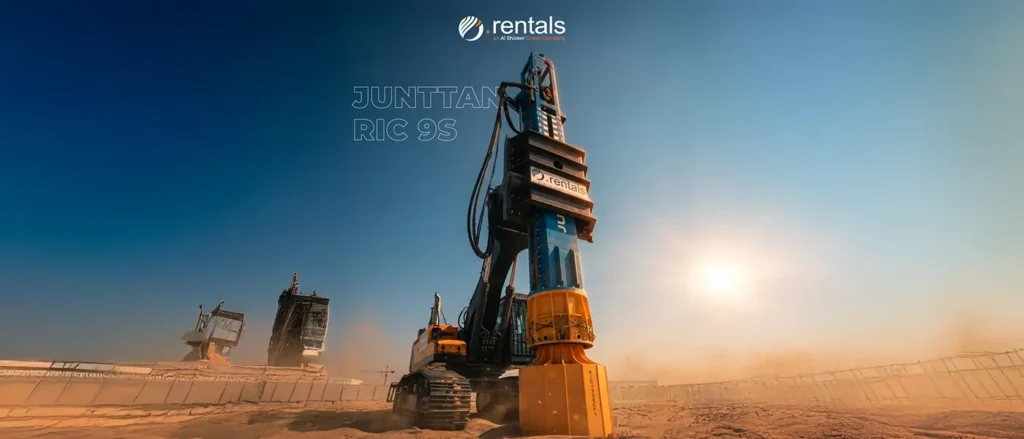
- Purpose-built dynamic compaction cranes, not general lifting cranes adapted for the job. The repeated drop cycle puts structural demands on a machine that standard lifting cranes aren’t designed for.
- Trained operators and supervision, since grid accuracy and drop consistency directly affect the compaction result.
- Parts availability and service support, to avoid downtime mid-project.
- Track record across multiple soil types and countries, to ensure a quality finish you can rely on across different ground conditions and how it responds to compaction.
- A single point of contact for equipment, crew, and logistics, which simplifies coordination on time-sensitive projects.
O.rentals provides all of the above: specialised dynamic compaction cranes, trained operator and service teams, and a parts supply chain built to maintain uptime, backed by project experience across multiple countries and soil conditions.
Common Mistakes to Avoid
- Skipping the trial area. Going straight to full-scale compaction without validating the design wastes time if adjustments are needed later.
- Using the wrong equipment. General-purpose cranes not designed for repeated heavy impact cycles wear out faster and pose safety risks.
- Ignoring vibration limits near existing structures. Without monitoring, dynamic compaction can cause complaints or damage claims nearby.
- Underestimating groundwater effects. High water tables can significantly change how soil responds to compaction energy.
- Treating it as a standalone task. Compaction needs to be coordinated with grading, backfilling, and verification testing to avoid rework.
Conclusion
Dynamic compaction rental is one of the most reliable, cost-effective ways to prepare loose, weak, or reclaimed ground for construction, provided the soil conditions suit the method and the work is carried out with the right equipment. From industrial pads and ports to reclaimed coastal developments across the UAE and GCC, this technique consistently delivers the bearing capacity and settlement performance projects need, without the time and cost of piling or lengthy preloading programmes.
Getting it right depends on accurate geotechnical input, a properly engineered compaction design, and equipment built for the job rather than adapted for it.
Have a Ground Compaction Requirement?
If your project is sitting on loose fill, reclaimed land, or collapsible desert sand, get in touch with O.rentals before your foundation design is finalised. We supply specialised dynamic compaction cranes, trained operators, and full-service support across the UAE, GCC, and international markets, managed from our Dubai base.
Contact O.rentals today to discuss your dynamic compaction and soil compaction equipment requirements and keep your construction project on schedule.
Contact O.rentals
Tel: +971 4 8855 169
Email: rentals@o.rentals
Services
Mobile: +971 50 107 6064
Toll Free: 800 RENT (7368)
Rental
Mobile: +971 50 640 9780
Toll Free: 800 LEASE (53272)
Address:
Dubai Investment Park 2, PO Box 282679, Dubai, UAE
Frequently Asked Questions (FAQs)
What soil types are suitable for dynamic compaction?
Granular soils such as sands, gravels, and mixed fills respond best. Saturated clays and highly cohesive soils respond better to other ground improvement methods.
How deep can dynamic compaction treat soil?
Typically around 8 to 12 metres, depending on drop weight, drop height, and soil conditions.
Is dynamic compaction noisy or disruptive to nearby sites?
Yes. The process generates noise and vibration, so monitoring and minimum offset distances from existing structures are standard practice.
How long does dynamic compaction take on a typical project?
Timelines vary, but a well-planned programme can treat several thousand square metres per week, significantly faster than preloading.
Why is dynamic compaction so common in UAE and GCC construction?
Reclaimed coastal land and collapsible desert sands both need ground improvement, and dynamic compaction suits the region's fast, design-and-build project timelines.
Does dynamic compaction replace the need for piling?
Not always. Very deep soft layers or extremely high loads may still need piling, but dynamic compaction is often chosen to avoid piling costs where soil conditions allow shallow foundations.
What's the difference between dynamic compaction and vibro compaction?
Dynamic compaction uses surface impact from a dropped weight, while vibro compaction uses vibrating probes inserted into the ground. Vibro offers finer depth control for tighter sites; dynamic compaction is generally faster on large, open areas.
Do I need a geotechnical report before hiring dynamic compaction equipment?
Yes. It confirms soil type, depth of loose material, and groundwater conditions, all of which shape whether dynamic compaction is suitable and how the grid should be designed.