Every warehouse manager in the UAE knows the feeling. Order volumes climb ahead of Eid, National Day, or the year-end retail rush, and suddenly the three forklifts that handled daily operations comfortably for eleven months of the year can’t keep up in the twelfth. Pallets back up at the dock. Shifts run long. And the question that always surfaces too late is: should we have brought in extra equipment weeks ago?
This is one of the most common operational headaches across UAE logistics, retail, and manufacturing — demand that spikes hard for a defined period and then drops back to normal. Buying enough forklifts to cover the busiest month of the year means most of that fleet sits idle for the other eleven.
Why Seasonal Peaks Put Real Pressure on Material Handling
Seasonal demand in the UAE isn’t limited to one industry or one time of year. Retailers see spikes around religious holidays and major shopping events. Manufacturing and FMCG businesses ramp up ahead of festive periods. Logistics and 3PL operators handle surges tied to e-commerce peaks and end-of-quarter shipping deadlines.
What all of these have in common is a mismatch between fixed capacity and variable demand. A warehouse sized for average daily throughput will always struggle when volumes jump 30–50% for a few weeks. Add to that the pressure of tighter delivery windows and customer expectations that don’t ease off just because your fleet is stretched, and the gap between ‘enough forklifts’ and ‘not quite enough’ becomes very visible, very quickly.
The Case for Renting Instead of Buying for Peak Demand
Purchasing additional forklifts to cover a seasonal spike is a decision with year-round consequences. You’re committing capital to equipment that will spend most of its working life underused, and you’re taking on ongoing costs; servicing, insurance, storage, depreciation, that don’t pause when demand drops back to normal.
Renting flips that equation. You bring in exactly what you need, for exactly as long as you need it, and hand it back once the peak has passed. For a business managing predictable seasonal cycles, that difference adds up fast.
Factor | Buying Extra Forklifts | Renting for Peak Season |
Upfront cost | High capital outlay | Minimal, pay for usage period |
Utilisation | Idle for most of the year | Matched to actual demand |
Maintenance | Your responsibility, ongoing | Typically covered by the rental provider |
Flexibility | Fixed fleet size year-round | Scale up or down as needed |
Storage | Requires yard/warehouse space when unused | No storage burden between seasons |
This isn’t an argument against ever owning equipment, plenty of businesses need a core fleet they rely on daily. It’s specifically about the extra capacity you only need for a few weeks or months a year, which is exactly where temporary equipment hire makes the most financial sense.
Short-Term Rental or Long-Term Lease: Which Fits Your Peak?
Not every seasonal spike looks the same, and the right rental approach depends on how predictable and how long your peak actually runs.
Short-term rental suits businesses with a clearly defined, contained peak — a two-week National Day rush, a month of Ramadan-related retail activity, or a specific project deadline. You bring the equipment in, use it intensively, and return it once volumes settle.
Long-term lease makes more sense when ‘seasonal’ really means several months of elevated activity, or when a business is scaling up operations and isn’t ready to commit to outright ownership. A lease can run from a few months to several years, giving you the use of the equipment without the balance-sheet impact of a purchase.
A good rental provider will talk through your volume pattern with you rather than pushing one option by default. If your peaks repeat on a predictable calendar year after year, it’s also worth discussing a standing arrangement so the equipment is reserved and ready before the rush actually hits, rather than being sourced reactively.
Need help choosing the term?
Share the start date, expected end date, number of shifts, expected working hours, and whether the peak is likely to continue.
What ‘Flexible’ Means in a Forklift Rental Service
Flexibility gets used as a buzzword a lot in equipment hire, so it’s worth being specific about what it should actually deliver for a business managing seasonal peaks.
- Scalable duration. The ability to hire for a single week, a full season, or multiple years without being locked into a rigid contract structure that doesn’t match how your business actually operates.
- Serviced equipment. Machines that arrive maintained and ready to work, with servicing handled by the rental provider throughout the hire period, not something your own team has to manage on top of an already busy season.
- Operators supplied on request. If your seasonal peak means you’re short on trained forklift operators as well as trucks, a rental provider that can supply certified operators solves two problems with one call, instead of leaving you to scramble for temporary staff.
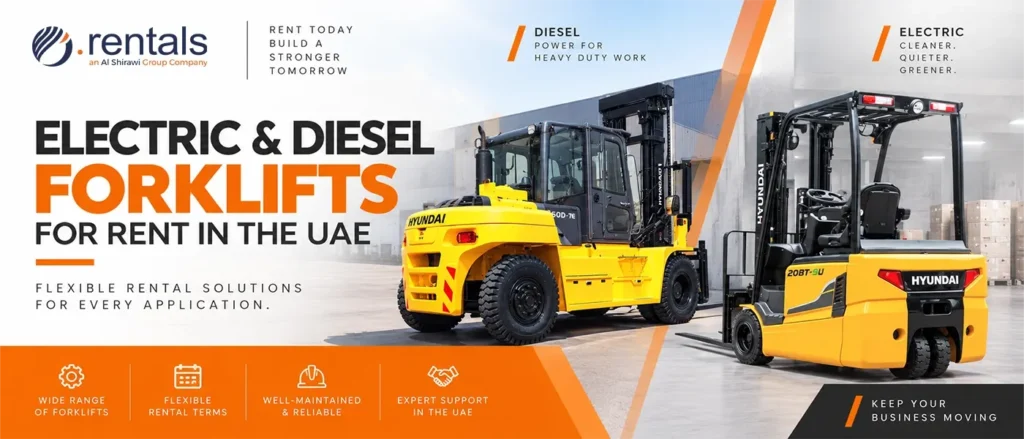
- Right equipment for the job. Diesel forklifts for outdoor yard work, electric units for enclosed warehouse floors, or specialised attachments for specific load types; flexibility also means access to the correct machine, not just any available one.
This combination is what separates genuine forklift rental services from simply renting a machine and hoping it fits. The equipment is only half the picture; the support around it is what keeps a peak season running smoothly.

When to Start Planning for Peak Season Equipment
The businesses that handle seasonal peaks well aren’t the ones with the biggest fleets, they’re the ones that plan early. Waiting until volumes have already climbed to start looking for extra forklifts puts you at the mercy of whatever’s available on short notice, which is rarely the ideal machine for the job.
A practical planning window looks like this:
- 8–10 weeks out — Review last year’s peak data (if available) and estimate the additional handling capacity you’ll need this cycle.
- 6–8 weeks out — Contact your rental provider to confirm availability of the right forklift type and, if needed, operators, for your specific dates.
- 4 weeks out — Confirm delivery logistics, site access requirements, and any operator induction or site-specific training.
- 1–2 weeks out — Final confirmation of quantities based on updated order forecasts; most rental providers can adjust numbers slightly closer to the date if volumes shift.
Businesses with recurring peaks — the same retail or logistics rush every year — benefit most from locking in arrangements early, since availability across the market tightens as the season approaches for everyone at once.
Common Mistakes Businesses Make with Seasonal Equipment Hire
Even businesses that recognise the value of renting sometimes get the timing or the details wrong. A few patterns show up repeatedly:
- Leaving it too late. Availability depends on the required model, capacity, quantity, location, and dates. Send the seasonal requirement before committing delivery promises to customers.
- Underestimating operator needs. Extra trucks without extra trained operators just move the bottleneck somewhere else.
- Renting the wrong equipment for the environment. Diesel forklifts in enclosed spaces, or units without the right attachments for your specific load types, create inefficiency instead of solving it.
- Overlooking site logistics. Access routes, charging infrastructure for electric units, and delivery scheduling all need to be sorted before the equipment arrives, not on the day it does.
None of these are complicated problems, but they’re the kind that a rental provider with real operational experience should be flagging to you proactively, not waiting for you to discover on your own.

How O.rentals Supports Businesses Through Seasonal Peaks
As the rental and leasing division of Al Shirawi Enterprises LLC, O.rentals has been supplying equipment across the UAE’s construction, warehousing, and material handling sectors since 2006. That experience means we’ve seen how seasonal demand plays out across retail, logistics, and manufacturing operations, and we structure our rental options around that reality rather than a one-size-fits-all contract.
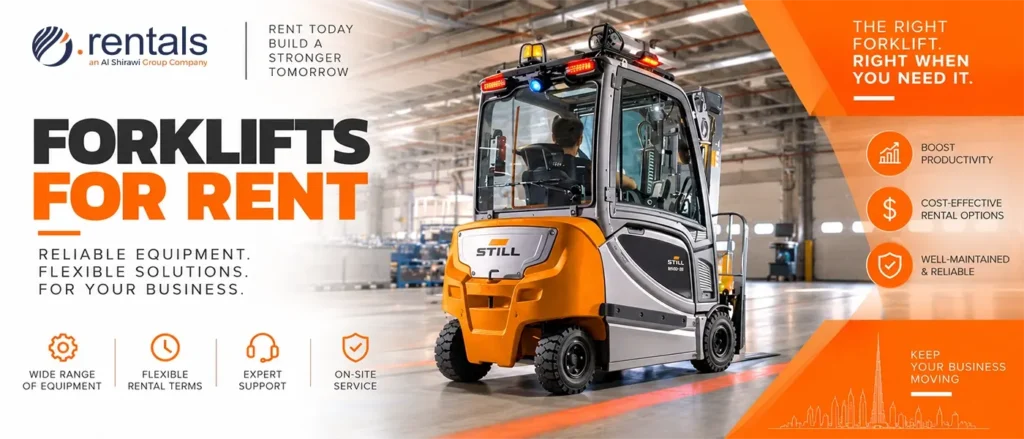
We offer both short-term rental for defined seasonal spikes and long-term lease arrangements for businesses managing extended periods of elevated demand. Every unit in our fleet — from diesel and electric forklifts through to specialised warehouse equipment — is serviced and maintained before it goes out, and we can supply trained operators alongside the equipment when your team needs extra hands as well as extra machines. Our fleet includes trusted global brands like STILL, and HD Hyundai Material Handling, so whatever your peak season throws at your operation, there’s a machine built for it.
Plan Ahead, and Let the Fleet Flex Instead of You
Seasonal peaks aren’t going away, and pushing a fixed fleet past its limits every year isn’t a sustainable way to manage them. Flexible forklift rental gives UAE businesses a way to scale handling capacity up when volumes demand it, and back down again once they don’t, without the long-term cost of an oversized fleet sitting idle most of the year.
If your business is heading into a peak period and you want to talk through short-term rental, long-term lease, or operator-supported forklift rental services, get in touch with O.rentals.
Get in touch with O.rentals:
Tel: +971 4 8855 169
Email: rentals@o.rentals
Services
Mobile: +971 50 107 6064
Toll Free: 800 RENT (7368)
Rental
Mobile: +971 50 640 9780
Toll Free: 800 LEASE (53272)
Address:
Dubai Investment Park 2, PO Box 282679, Dubai, UAE
Frequently Asked Questions (FAQs)
What is a forklift truck for rent typically used for during seasonal peaks?
Rented forklifts are commonly used to add temporary handling capacity during periods of higher order volumes, such as retail peaks around holidays, warehouse throughput surges, or short-term project work, without committing to the cost of owning additional equipment year-round.
How far in advance should I book forklift rental for a seasonal peak?
As a general guide, six to ten weeks ahead of your expected peak gives a rental provider enough time to confirm equipment availability and, if needed, arrange trained operators. Booking earlier is especially important for recurring annual peaks, when demand across the market rises for everyone at the same time.
Is it cheaper to rent or buy a forklift for short-term seasonal use?
For genuinely short or seasonal demand, renting is almost always more cost-effective than buying, since you avoid the upfront capital cost, ongoing maintenance, insurance, and storage expenses associated with equipment that would otherwise sit idle for most of the year.
Can I rent a forklift with an operator included?
Yes. Many forklift rental services, including O.rentals, can supply certified operators alongside the equipment, which is particularly useful during peak periods when your own team may be stretched or short on trained staff.
What's the difference between short-term rental and long-term lease?
Short-term rental typically covers days to a few weeks and suits a clearly defined spike in demand. Long-term lease covers extended periods, from several months up to a number of years, and suits businesses managing sustained elevated activity or scaling operations without committing to ownership.
Do rental forklifts come serviced and maintained?
Reputable rental providers maintain their fleet before and during the hire period, so the equipment arrives in proper working condition and any servicing needs during the rental term are typically handled by the provider rather than the hiring business.
What types of forklifts are available for rental in the UAE?
Options generally include diesel forklifts for outdoor and heavy-duty use, electric forklifts for indoor and warehouse environments, and LPG forklifts as a middle-ground option, alongside specialised warehouse equipment like reach trucks, order pickers, and pallet stackers depending on the operation's needs.